
Archive of Writings
Additional articles can be found on EVSN.tv.
Ringworld: When Good Sci Fi Gets Old
 It’s summer, and that means I get to read fiction. The time I spend preparing for class during the semesters prevents me from often getting to enjoy the simple luxury of a book that I’m not either teaching from or reviewing. With my grades turned in, it times time to find a good paperback. Wanting to be a properly educated geek, I turned to Larry Niven’s
No significant spoilers ahead.
Party at Fraser’s!
Or at least a Carnival at Universe Today
Instead of writing a long post today, I’d like to encourage everyone to click over to my Astronomy Cast cohost Fraser Cain’s Universe Today and check out the list of posts he has pulled together for this week’s Carnival of Space.
A new day rises on other Worlds
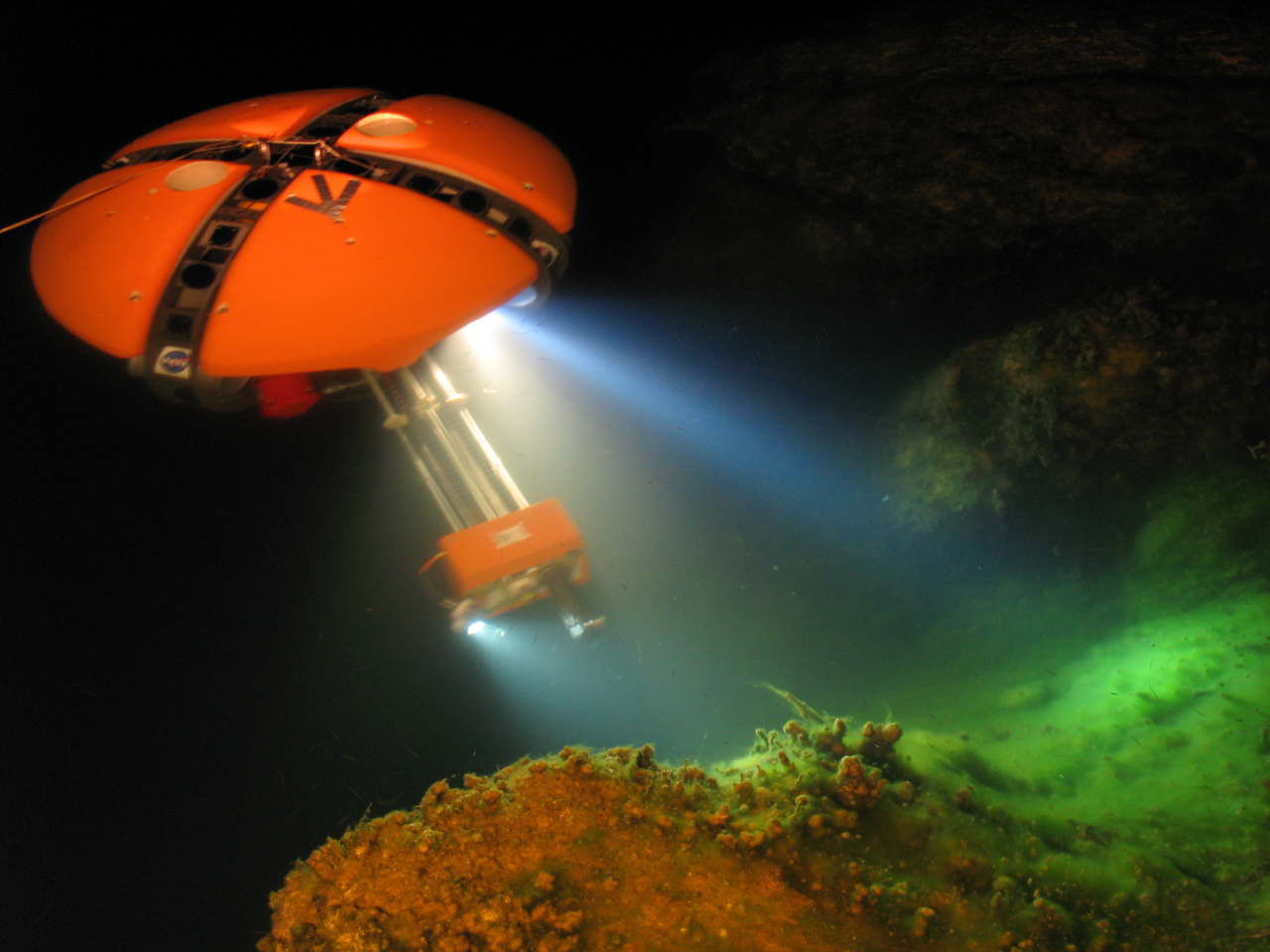 We seem to be entering a renaissance age of planetary science. Using the great observatories of the Earth (on and off the surface), scientists are discovering new worlds of every imaginable shape and size. More locally, we are building space craft to explore our solar system. New Horizons is on its way past Jupiter as it heads to the Kuiper Belt and the non-planet Pluto. Phoenix has been delivered to Florida, its layover station as it travels from Colorado to the polar ice caps of Mars. Waiting in the wings are plans to go Europa and look for life. As we explore these worlds, care is being taken to leave them as pristine as we find them, and we are using the results of our great terrestrial experiment at civilized life to identify some of the ways life can effect atnospheres. Our goals are simple: explore, leave no biological imprint, and find other life via their biological imprints.
Between the Romans and the Lions
The other day I had an Astronomy Cast fan send me an email asking where I fall on the Dawkin’s Continuum. He was referring to the belief scale that Richard Dawkins laid out in his new book, The God Delusion. Within this system, individuals are divided by their level of belief that God does or does not exist. On his scale of 1 to 7, a person who is a strong theist, with 100% certainty that God exists, rates a 1. A person who is a firm atheist, who knows with 100% certainty that there is no God, rates a 7. Discussion of both this book and this scale are currently popular within skeptics circles and on atheist websites. Faced with this listener question, I have to admit to being a bit scared, because to many there is a “right answer.” This is a problem both when I deal both with scientists and with theologians (however the correct answer depends on the grader).
It is all a Function of Mass
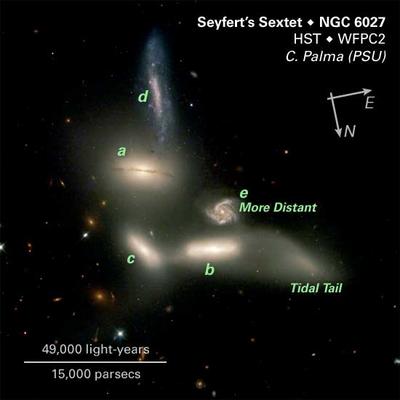 Throughout math and physics certain trends occur over and over. The unique numbers of pi and phi (the golden ratio) respectively define circles and spirals. The mathematical forms of the equations for gravitational force and electric force are the same, and the physical forms of fractals get bigger without changing shape. Now, a pair of astronomers, Bruno Binggeli and Tatjana Hascher of the University of Basel, are searching for a universal mass function that describes the ratios of little stars to big stars as well as the ratios of groups of galaxies to clusters of galaxies. According to a review paper accepted for publication in the PASP “the mass functions of individual object classes, when properly normalized, can indeed be concatenated to build a surprisingly continuous mass function of the universe.” From 100-meter-size asteroids (10^-20 Solar masses), to the most massive of galaxy clusters (10^16 solar masses), and across 36 orders of magnitude in mass, they find (roughly) the same relationship. Put simply, the same mathematical form, an inverse square function, describes how there are more red dwarf stars than blue super giants, and why there are more galaxy groups, like Seygert’s Sextet, than galaxy superclusters like Virgo.
AAS – Austin, TX
I get to go (subject to funding) and be the proud academic parent as at least 1, and possibly 2, of my students present their first papers.
AAVSO 2007 Fall Meeting
Still not sure what I'll be up to, but I plan on being there to enjoy the first meeting in the new building 🙂
AAPT – Greensboro, NC
I'll be giving a workshop and assisting in a panel discussion at the AAPT Greensboro meeting. Workshop Doing Real Science Projects with Small Telescopes Pamela L. Gay In this workshop participants will get resources on how they can get involved in real science using...
Cosmos in the Classroom 2007
I will be attending the ASP’s Cosmos in the Classroom 2007. Workshop Online Education and Intellectual Property Protection Pamela L. GayAs students and textbooks become more wired, instructors are responding by posting content online, providing digital homework,...
EPO and a Changing World
I hope to be attending the ASP's EPO and a Changing World conference in Chicago. My abstracts are in, and now all I need is funding. Proposed Workshop (Approval Pending) Your Face(book) and MySpace: Let’s hook up Pamela L. Gay and Thomas Foster (SIUE) In the...